
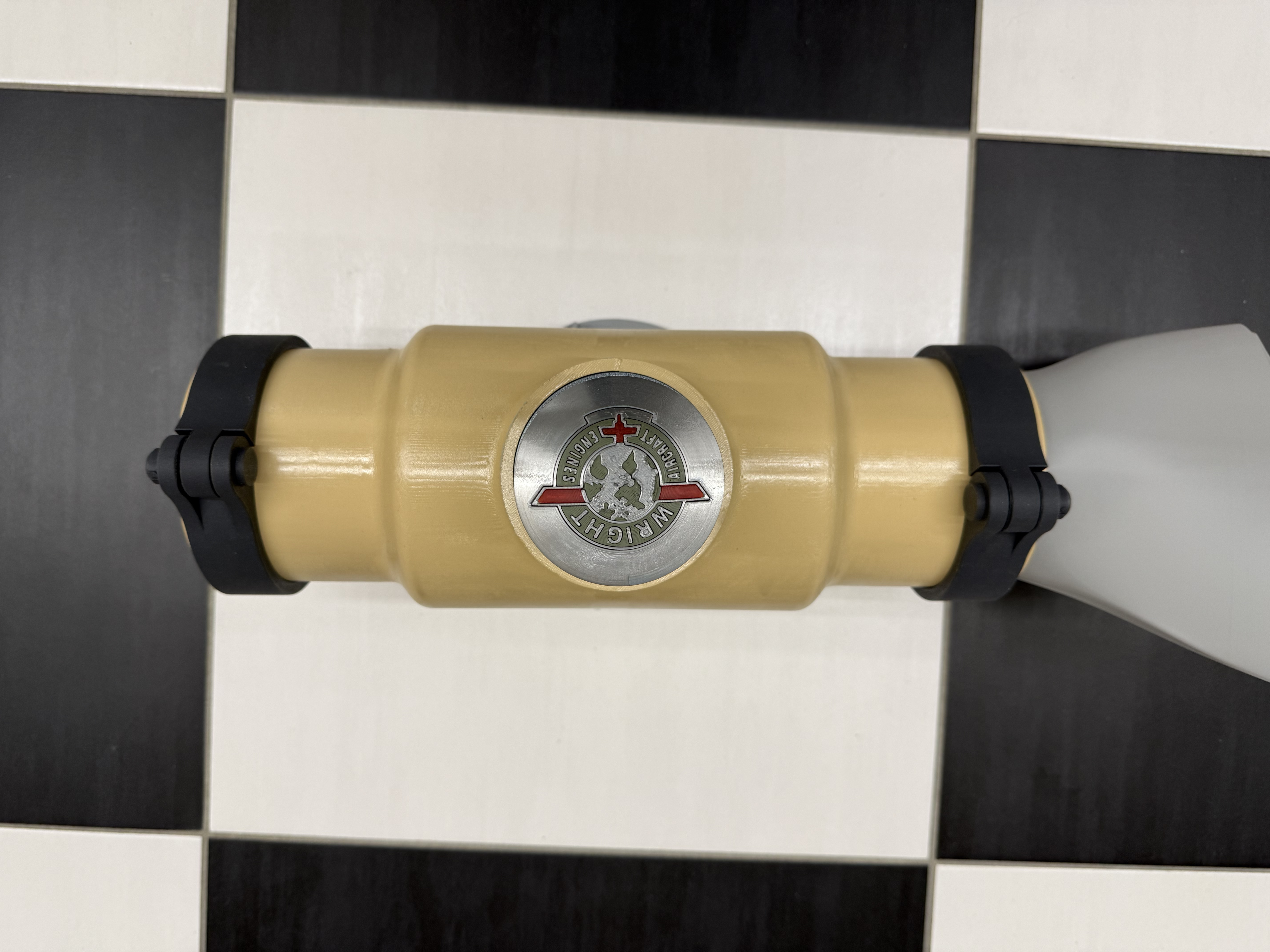
The iconic ground-adjustable propeller that is at the center of every Hamilton Standard logo.
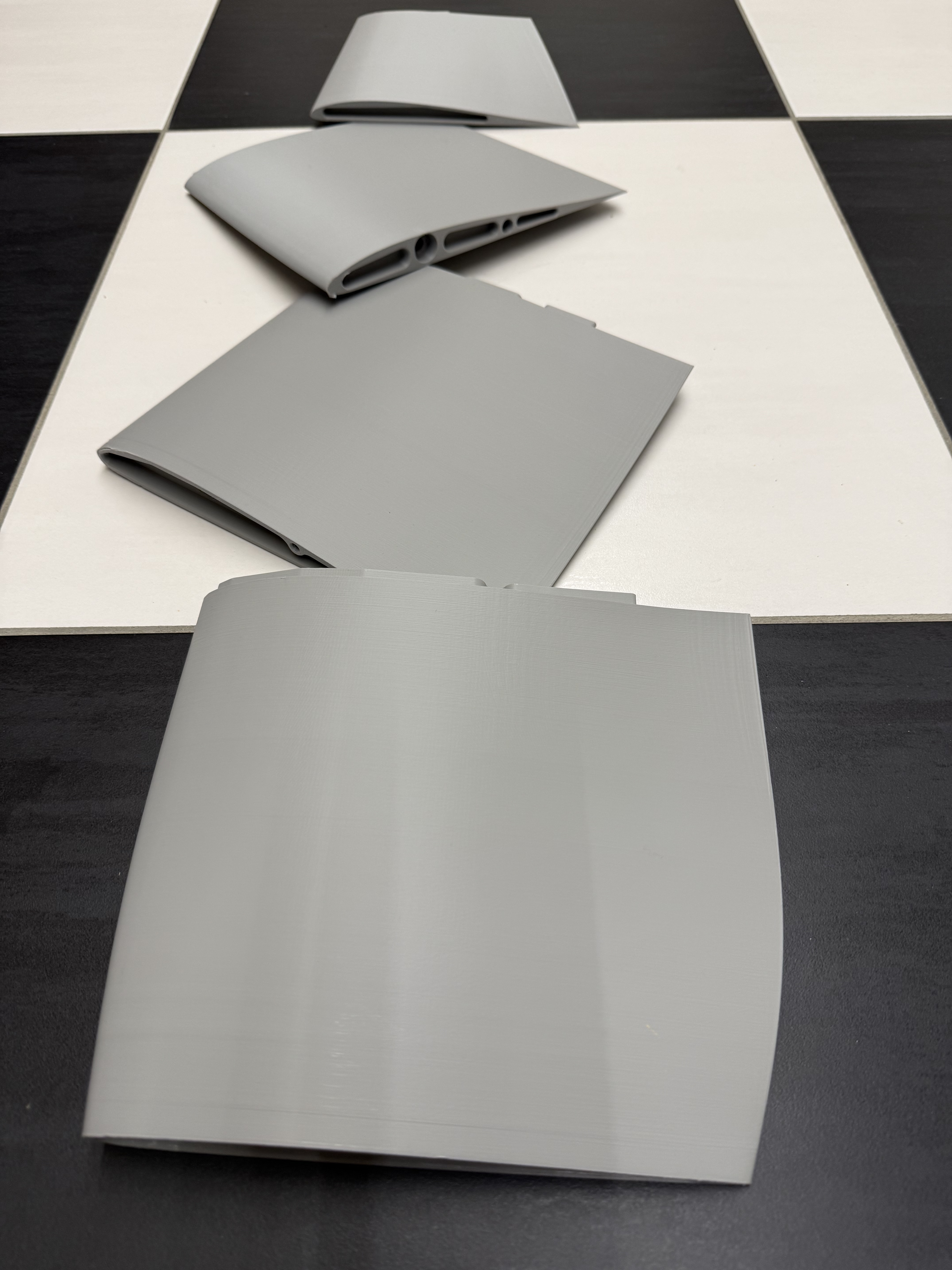
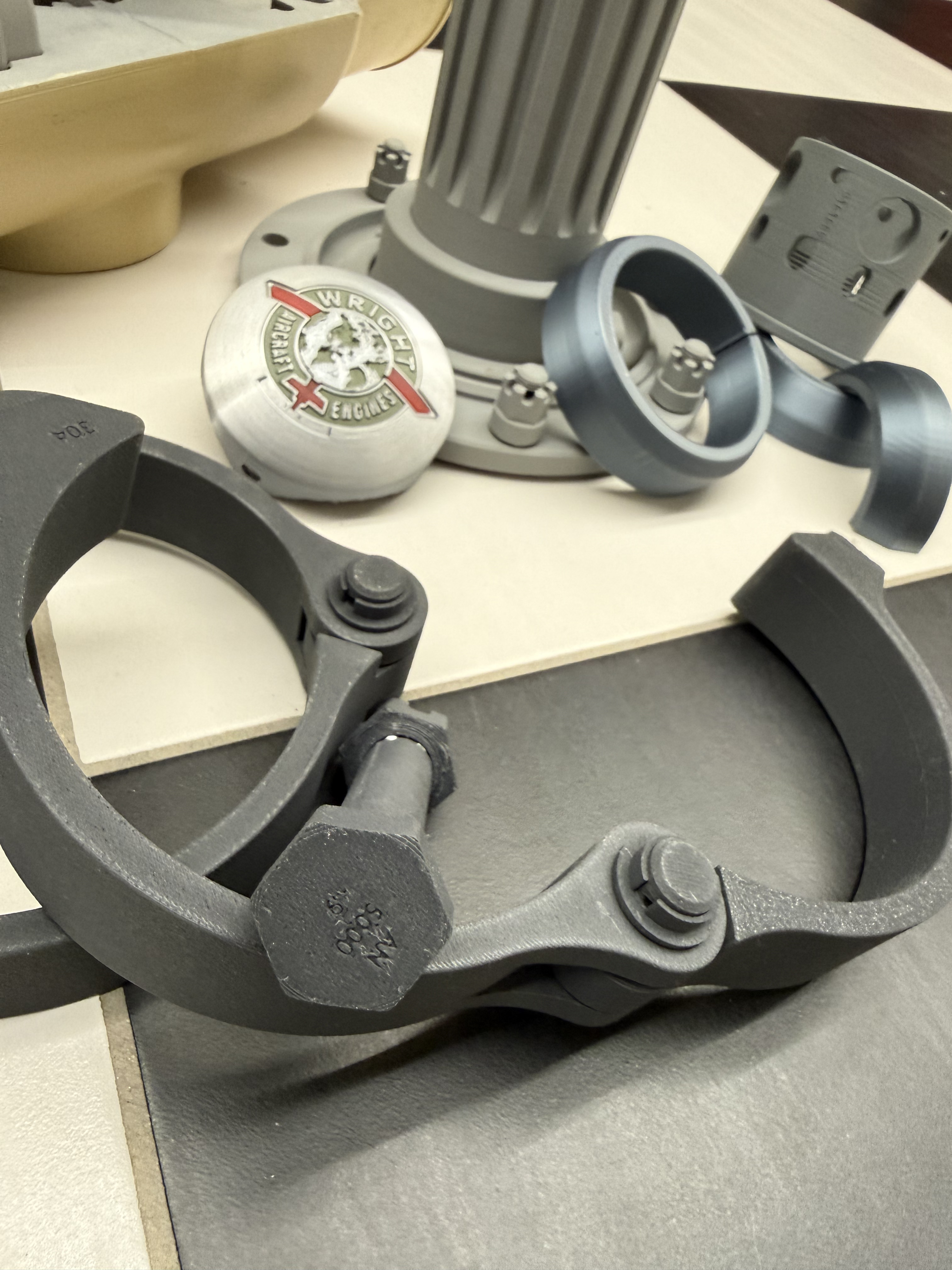
The 5406 hub and 1C1 blade combination belongs to an earlier and simpler chapter of propeller design than the 6101A-12 — the ground-adjustable era. Before constant-speed propellers could change pitch automatically in flight, a two-piece steel hub let ground crews loosen the blade clamps, twist each blade to a new angle by hand, and lock it back down — a compromise setting chosen to balance takeoff power against cruise efficiency, and left alone for the rest of the flight. It was crude by later standards and exactly right for a primary trainer.
That's exactly the role this hub-and-blade pairing filled on the Boeing-Stearman Model 75 — the biplane trainer flown by the U.S. Army Air Forces as the PT-13 and PT-17, by the Navy as the N2S, and nicknamed the "Kaydet." Paired with seven-cylinder radials from Continental, Lycoming, and Jacobs in the 220–225 horsepower range, the 5406's ground-adjustable blades were simple enough for a primary cadet to understand and rugged enough to survive what primary cadets did to an airplane.
More than 8,500 Stearmans were built between 1936 and 1944, making it one of the most widely produced trainers of the era — nearly every U.S. military pilot of World War II took their first flight behind a propeller like this one, years before they ever sat behind something that could feather, reverse, or change pitch on its own. Building this one isn't building the propeller that won the war. It's building the propeller that came before — the one that taught people to fly at all.
The 5406 / 1C1 combination can also be found on sports and racing aircraft of the late 20's, where the adjustability and the durability were found to be a major advantage over the fixed-pitch wooden propellers that it had started to replace.
Every dimension of this particular propeller is drawn from available period reference data and actual field measurements and direct comparison with surviving examples, no guesswork.
Manufacturing specifics for this replica:
A note for the detail-obsessed: the 5406 hub takes its name from the SAE No. 30 spline engine shaft it was built around — the same naming logic used across the whole ground-adjustable family. Unlike the variable-pitch propellers that came later, every 5406/1C1 installation required a ground crew to physically reset blade angle between missions calling for different performance — there was no "automatic" on this propeller. What you're building is the transitional technology between fixed-pitch wood and the constant-speed hydraulics that replaced it within a decade.
The same three-stage process is used across every model — more detail on each stage is found here.
Ready to build the legend, full size, full stop?